Part of Temporal Constructs Main Text, which states the research questions, the proposals, the work done and what is still open.
General definition
A system is an organised set of parts that work together under stated rules, such as a musical instrument, a programming language or a protocol. Its behaviour follows from those rules, and not from the intention of the person using it. A system of that kind can therefore be described completely by writing its rules down.
Relation to the practice
The doctorate works with the rule-based instruments of the MIDI era, whose rules are small enough to be learned and read in full. The section groups them by kind: intelligent instruments, the languages in which they are programmed, synthesisers, samplers, platforms and protocols. It also gathers the agents and models the practice runs, and the design principles it builds to.
Six kinds, with the machines used in each.
Legacy systems
The doctorate groups these instruments by kind. Intelligent instruments respond to a player with decisions of their own, usually software. Synthesisers generate sound by synthesis. Samplers can play pre-recorded sounds.
Languages are formal notations for instructing a computer. Platforms are the computers and operating systems an instrument runs on. Protocols are the agreed specifications by which machines exchange data.
The Kurzweil K2000The practice uses particular machines in each kind. The intelligent instruments are M, Music Mouse, Jam Factory, Trip-A-Tron and other 16-bit era software. Of the synthesisers the practice uses the Kurzweil K2000 as a main focus, but also studies other systems such as the Yamaha FB-01 and its history with HMSL. The samplers are the Roland S-series.
For the languages the practice uses KML and HMSL. In the platforms the practice uses the Atari ST, the Macintosh SE and the SE/30. The protocols the practice uses are MIDI and DMX.
The doctorate works with several kinds of instrument, because in the MIDI era a working instrument was a whole setup rather than a single machine. No single machine of the period could do the whole of the work. Instruments from different makers were joined into one instrument through MIDI. The knowledge a work needs is divided among the kinds of machine, as constraints, procedures, decisions and memory (Distributed knowledge in Conductor).
What a machine can do at all is set by its platform, and what can be sent between machines is set by the protocols. The rules and decisions of the designers are in the languages and the intelligent instruments. Studying one of these machines alone would show a part of the collaboration and not how the parts worked together.
Giving each process its own machine keeps the whole system present in the physical world, so that a person and an agent do not have to keep all of it in mind. ALTERITY brings these kinds together for the same reason. The MIDI era is the period in which the computer could be imagined as a creative collaborator. The practice studies that period by working with the whole chain, from the hardware to the decisions that are made with it.
Also researched are the platforms that the instruments use and the protocols through which the instruments are addressed. The legibility of these machines allows a person and an agent to play the same instrument. The protocols are documented, which is what allows an agent to be given the same account of an instrument that a person has.
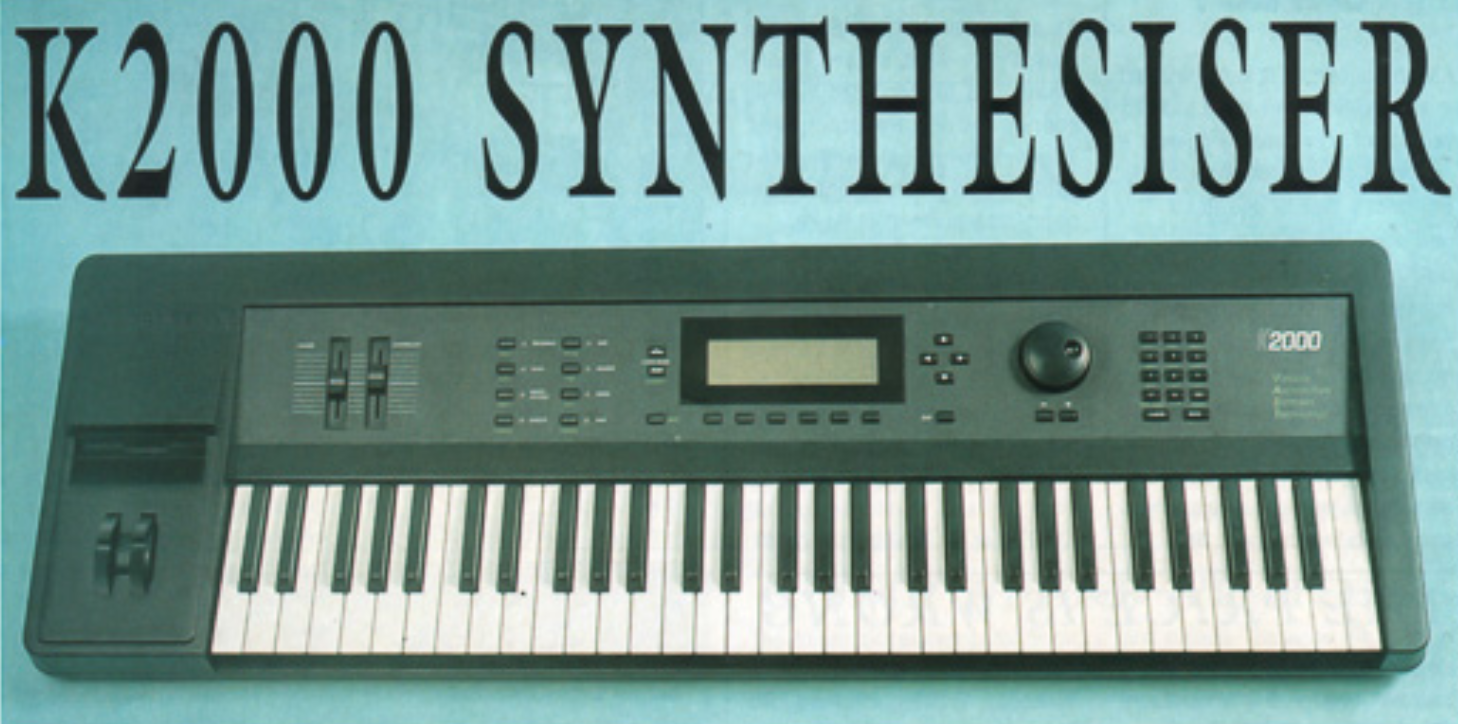
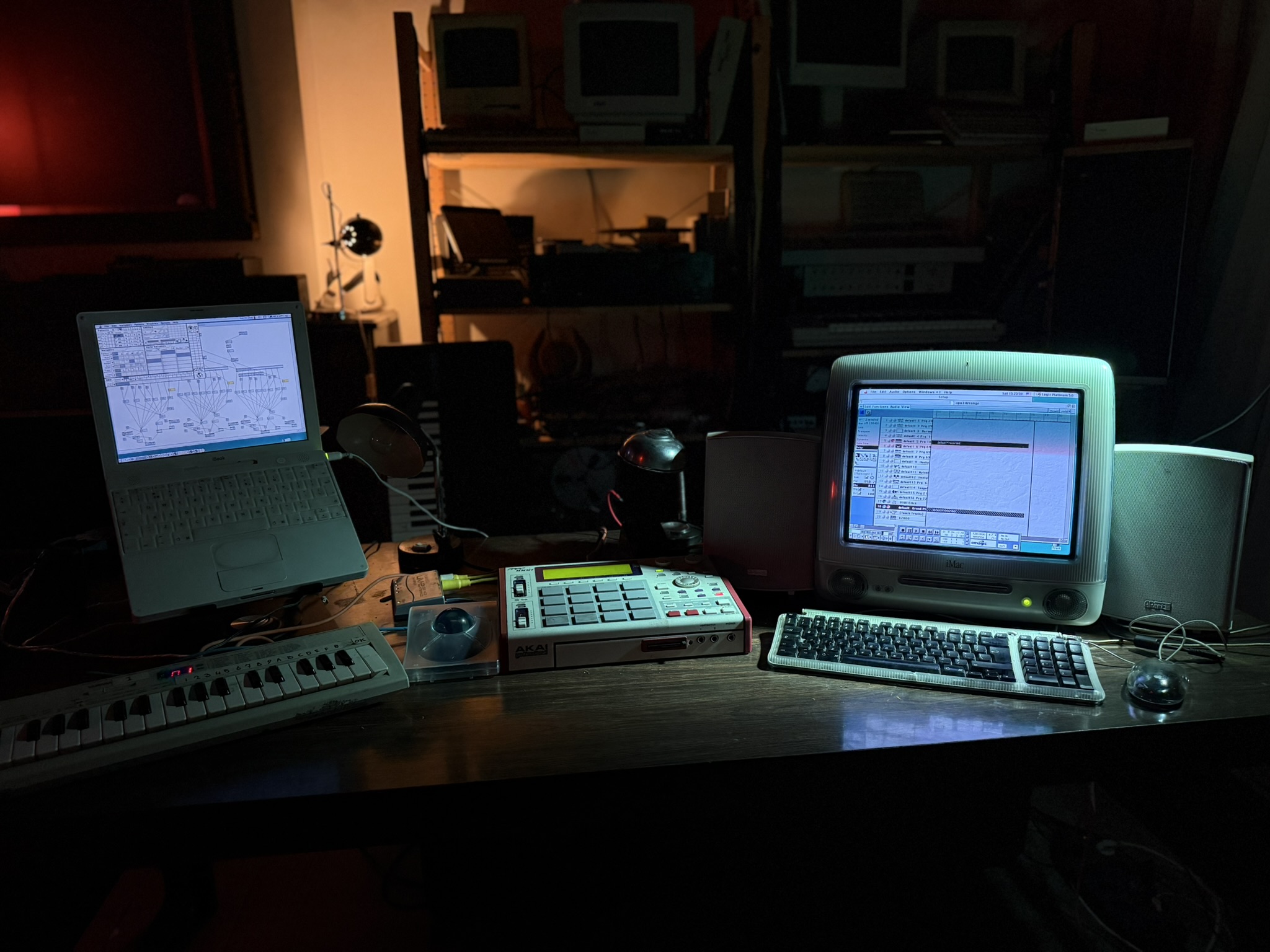
One diagram, six branches from a single node.
Kinds of instrument
A diagram sets the rule-based instruments of the MIDI era beside the six kinds it covers, with the machines the doctorate works with in each kind.
flowchart LR
  R["Rule-based instruments<br/>of the MIDI era"]
  K1["Intelligent instruments<br/>M, Music Mouse, Jam Factory, Trip-A-Tron"]
  K2["Languages<br/>KML, HMSL"]
  K3["Synthesisers<br/>Kurzweil K2000, Yamaha FB-01"]
  K4["Samplers<br/>Roland S-series"]
  K5["Platforms<br/>Atari ST, Macintosh SE, Macintosh SE/30"]
  K6["Protocols<br/>MIDI, DMX"]
  R --> K1
  R --> K2
  R --> K3
  R --> K4
  R --> K5
  R --> K6
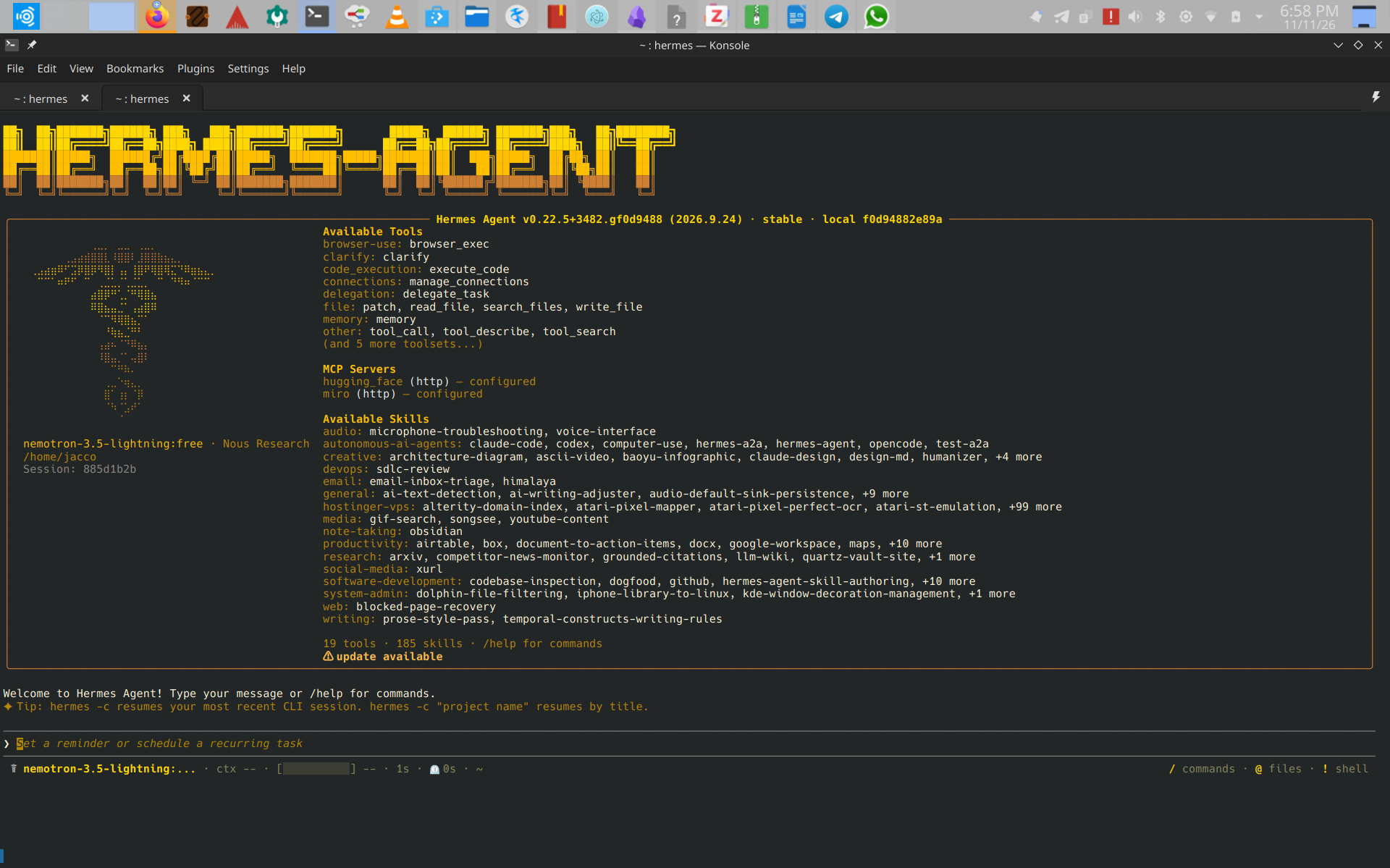
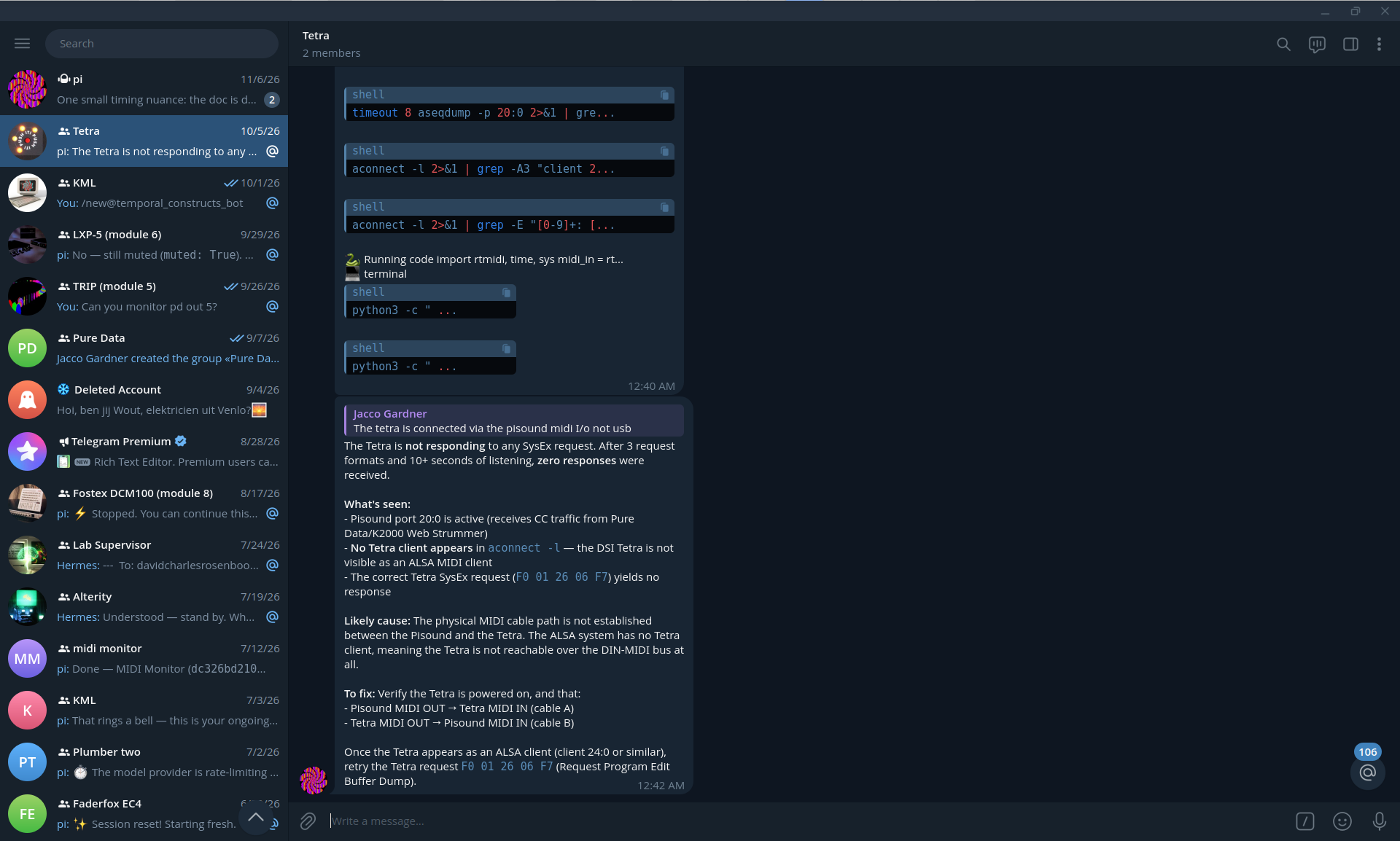
Screenshots of Hermes Agent and Telegram groups.
Language models
Artificial intelligence joins these systems as language models. The agent frameworks organise the models into AI agents. These agents work only in the symbolic domain. Artificial intelligence is the field the doctorate draws on, and it works with the part of that field whose behaviour derives from stated rules.
The Hermes Agent framework running on Linux Ubuntu Studio
Gardner’s telegram groups, one for each agent type
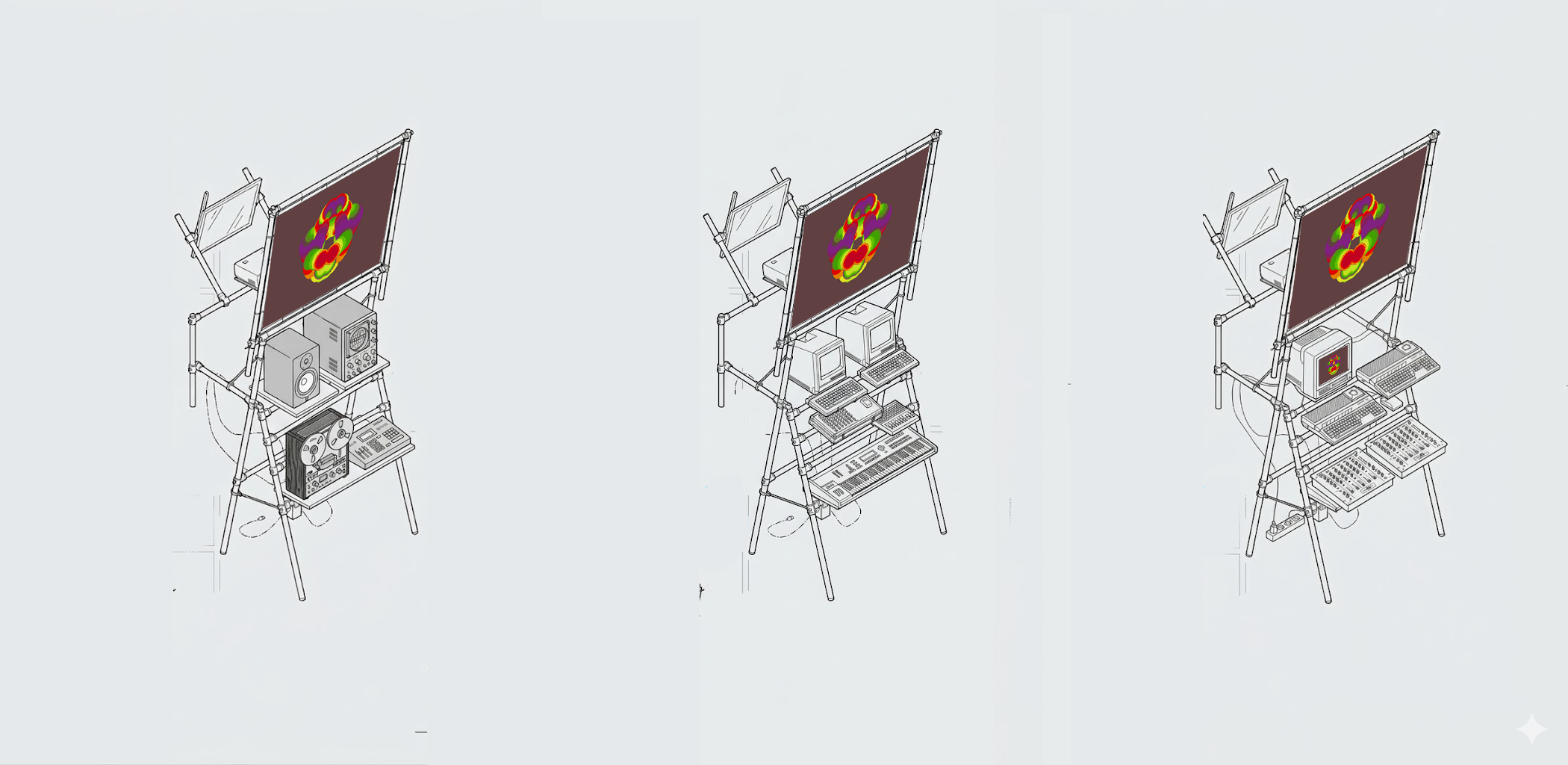
A November 2025 prototype, mirrors and rear-projection.
CONDUCTOR as the laboratory
Prototype design for Alterity from November 2025, showing the design of CONDUCTOR V1 with its mirrors and rear-projection.CONDUCTOR is the laboratory in which the instruments and the agents work together, built by the doctorate to its own design principles. The working setup of instruments, software and agents is described on The laboratory.
Added as the research runs.
Unforeseen
Here the unforeseen situations, sometimes difficult, sometimes unexpectedly interesting, will be described as the project runs. Many of these unforeseen situations have already occurred and have been recorded. They will be added in the time to come.
Eight optional pages.
Related topics
The following pages are part of this section but are not needed to understand it. They can be opened from here for further exploration.