Part of Temporal Constructs Appendix, which contains details behind the research: dates, quotations, descriptions of instruments, and sources.
General definition
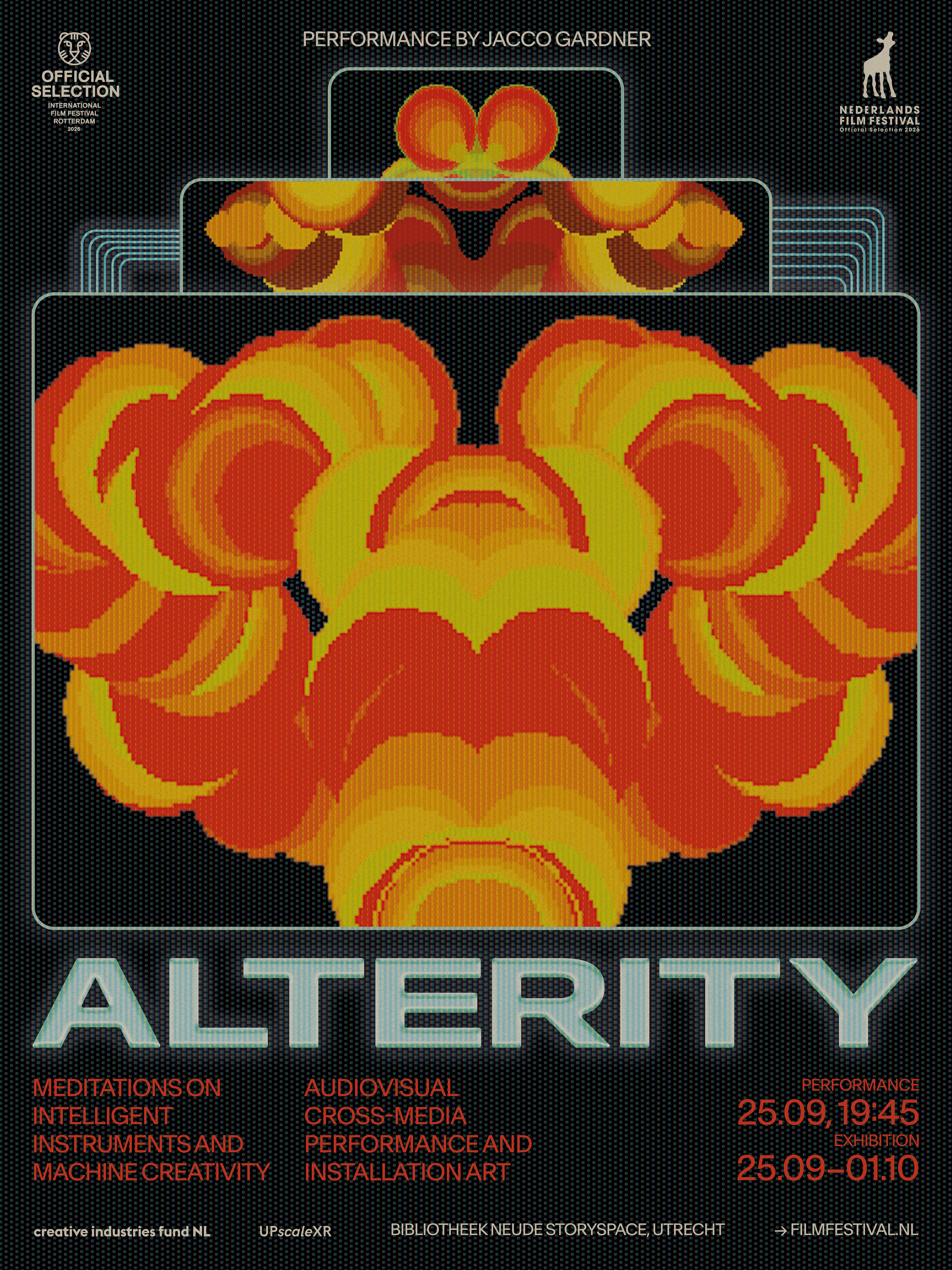
ALTERITY is a performance installation for one human voice, legacy intelligent instruments and contemporary artificial intelligence. It combines intelligent instruments of the MIDI era with AI agents through CONDUCTOR, and its instruments are a MiSTer reconstruction of the Atari ST running Trip-A-Tron, a Macintosh SE running M, a Macintosh SE/30 running Max and a Kurzweil K2000, which carries the sound. María Pandiello wrote the narration from research of her own and from the media archaeology of Jacco Gardner, and it sets out how and why these machines were made and traces the recurring wish to build a thinking other.
Relation to the practice
It is part of the artistic output of the professional doctorate, and each iteration is documented as a controlled variation. The documentation records what was delegated to agents, withheld, initiated by them or overridden by the artist. The work is also commercial, through exhibitions, touring fees, festival ticket sales and an album in development. It presents the research to audiences. Its instruments and their history are part of the work, and a grant from the Creative Industries Fund received in 2025 supported the performance-based audiovisual media installation.
ALTERITY is a cross-media performance installation in which the instruments of the MIDI era and modern artificial intelligence perform together against a recorded narration. CONDUCTOR operates the apparatus, and the name covers both the installation and the framework that runs it. The work joins a model’s decisions to a machine’s instruments, and it uses the period equipment as its material. A live audiovisual response is improvised against the narration, as against a silent film. The work is improvisation-based.
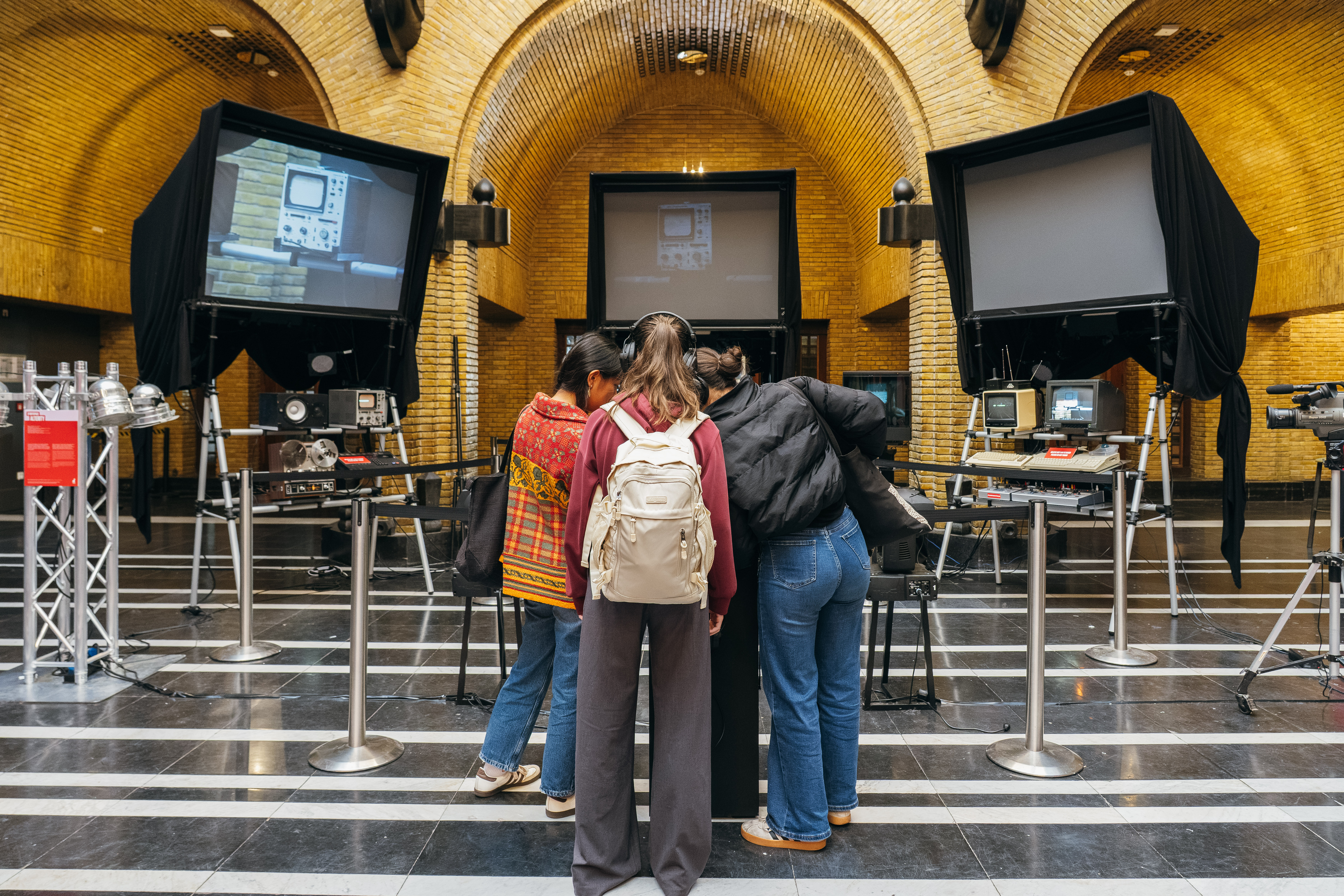
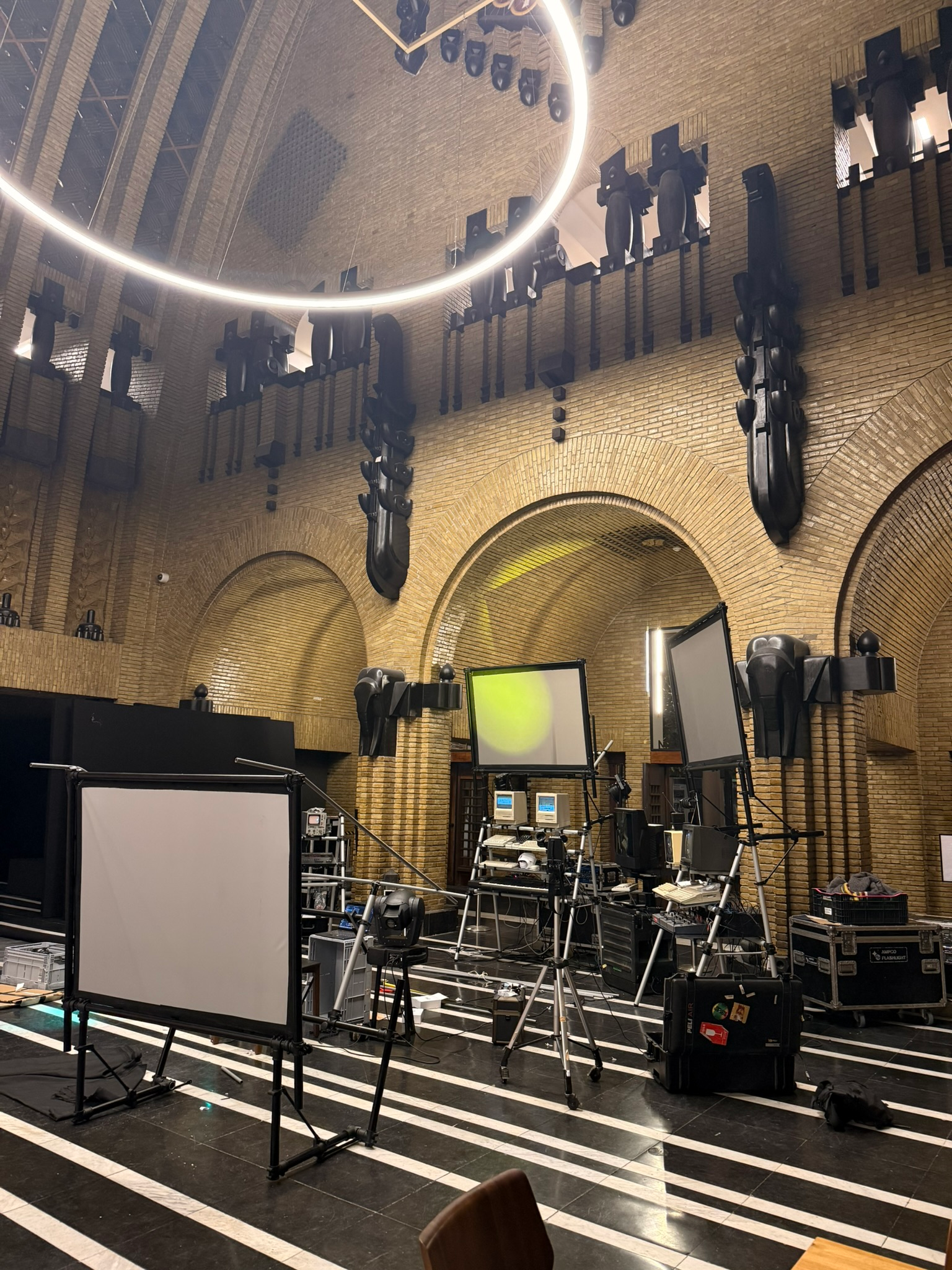
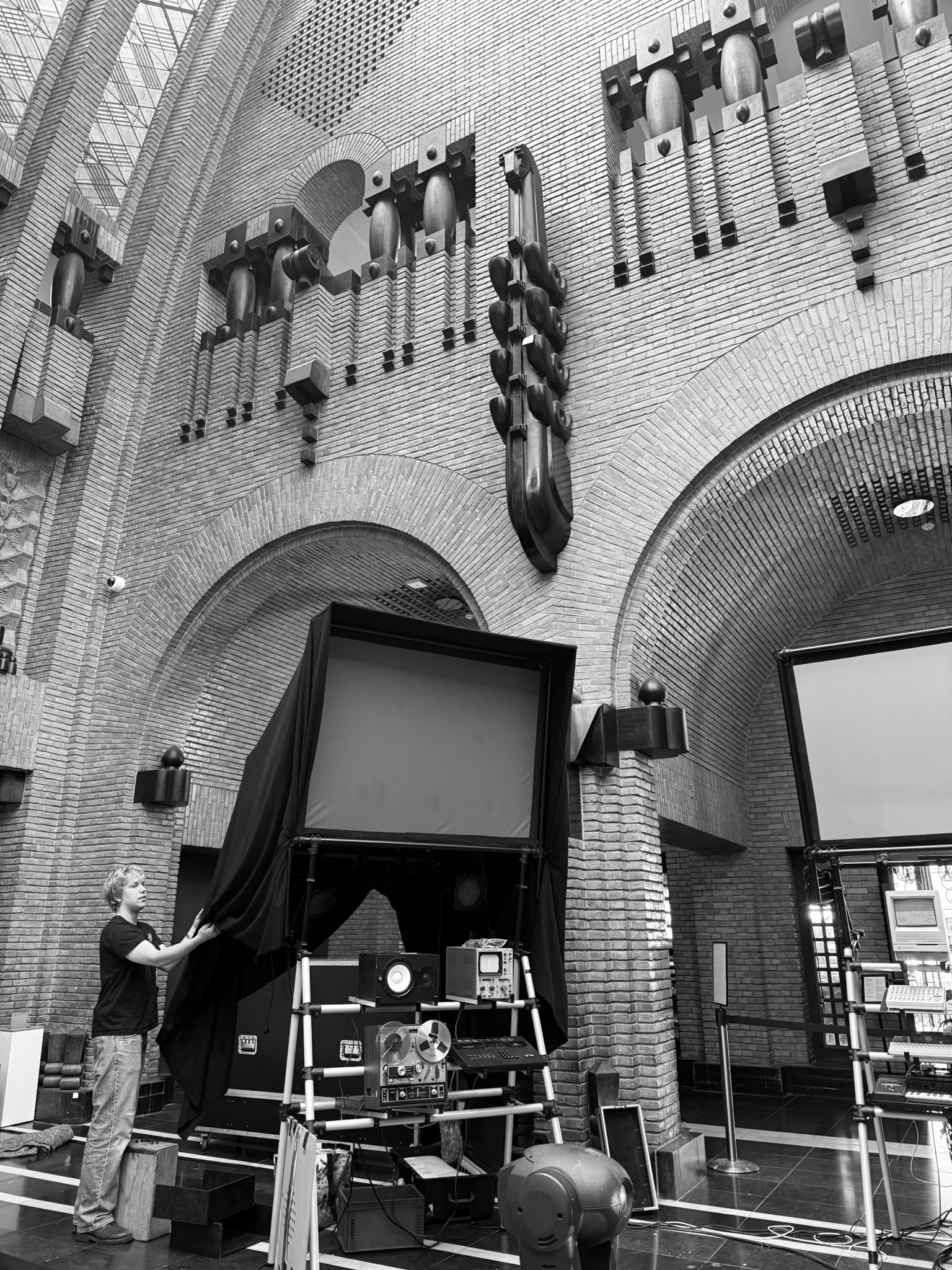
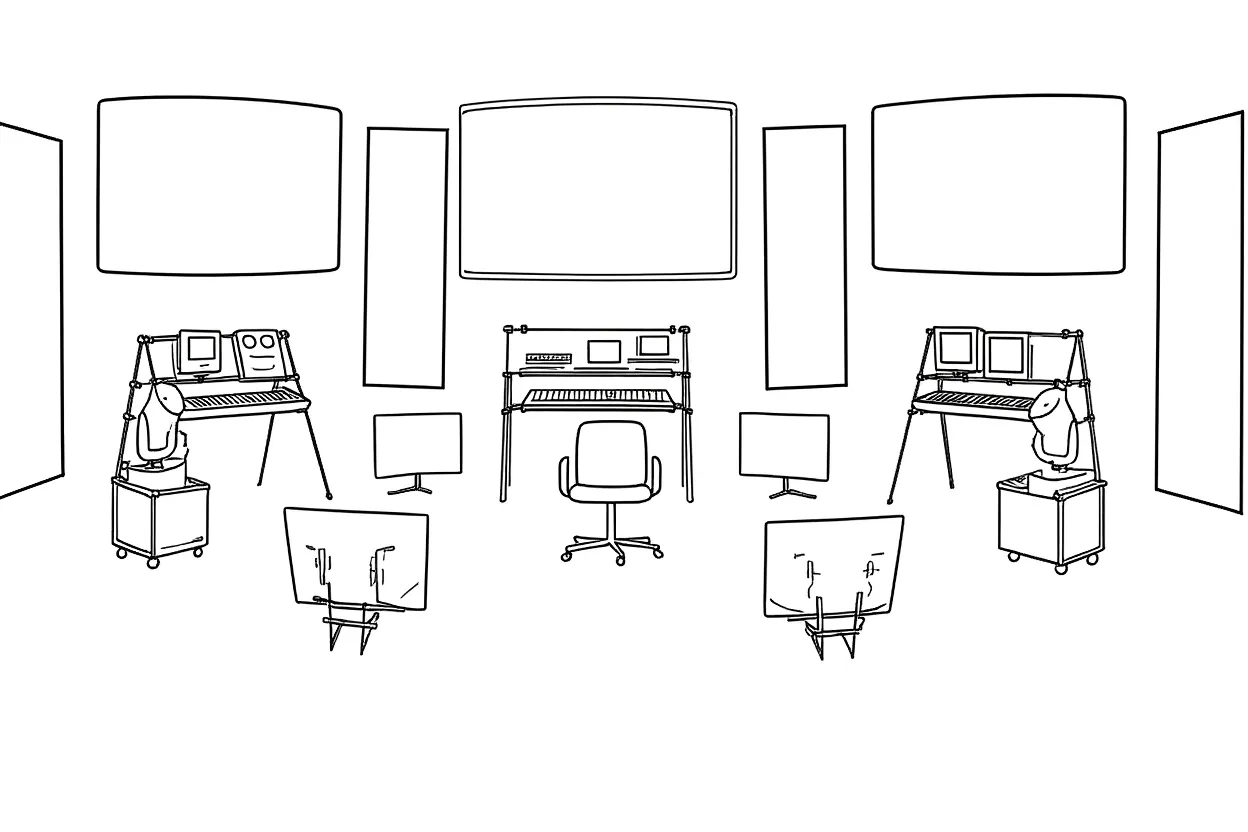
The installation is three towers of period equipment, arranged in a C-shape four metres high with the audience inside it. Each tower carries its own rear-projection screen. Three MiSTer boards, one for each screen, supply the Atari ST core that runs Trip-A-Tron. An original Atari ST stands in the installation, not running, and is shown to the audience at the points in the narration where the machine is the subject.
Edited video footage of Alterity during its residency at MU Hybrid Art House in August/September 2026.
A Macintosh SE of 1987 runs the sequencer M, which Joel Chadabe and David Zicarelli developed at Intelligent Music. A Macintosh SE/30 of 1989 runs Max, written by Miller Puckette in the mid-1980s, and a Kurzweil K2000 of 1991 carries the sound. The account the work gives of them states the reason they are used: their control surfaces can be read in full, by a person and by a language model alike.
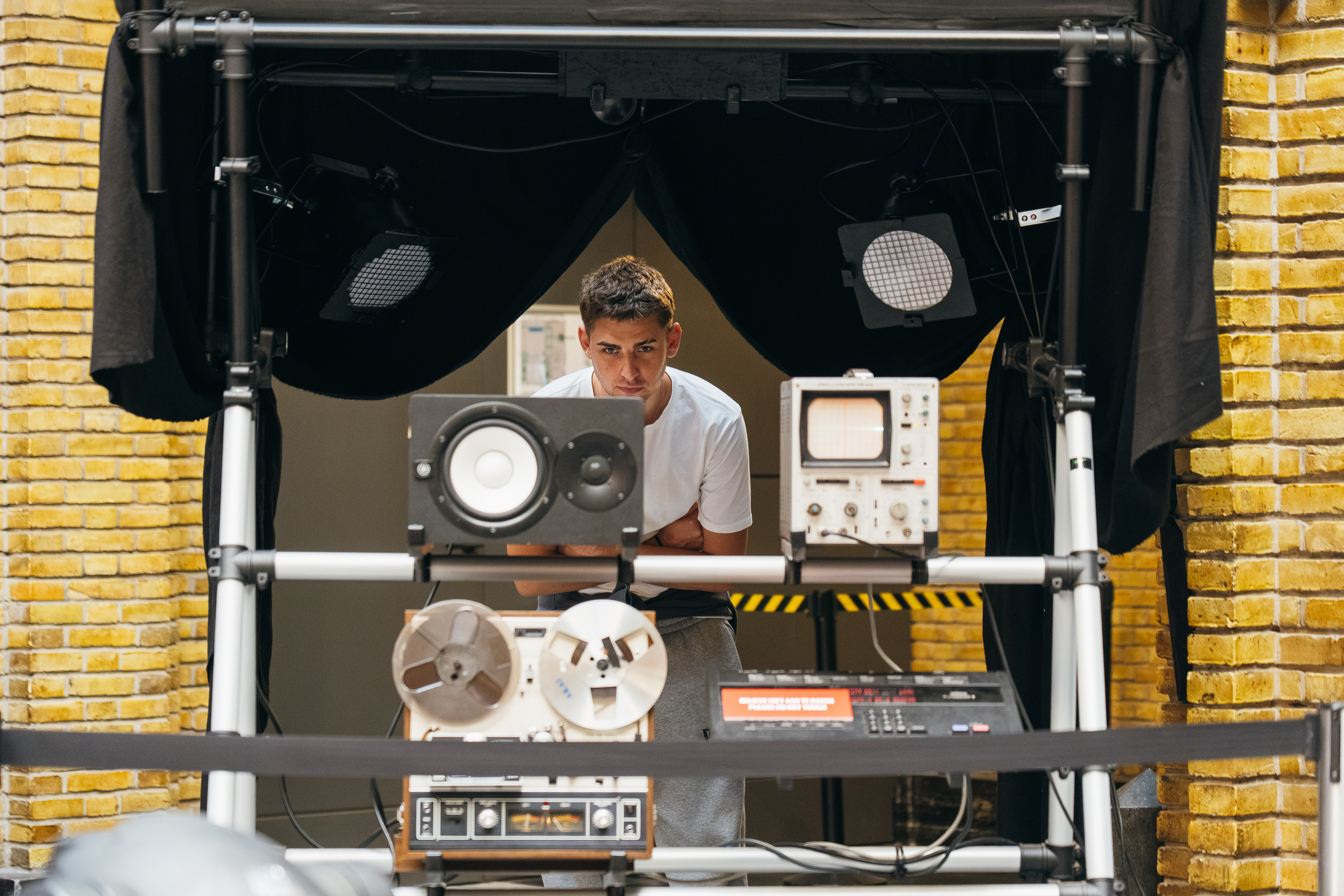
The narration is carried on a reel-to-reel tape machine, with SMPTE timecode, the standard that synchronises film and sound, on its second track. A Yamaha MSS-1 reads that timecode and converts it into MIDI, which fires the scene changes and the system states across the three towers at once. The sound is placed quadraphonically, on four speakers at the corners of the room.
In the first tower stands a laboratory oscilloscope of 1958, sold as a kit with assembly manuals that included a full theory of operation. It renders the narrator’s voice as a waveform, and a live camera carries the trace onto the screens. At other moments the system shows footage of the inventors of the digital revolution, manipulated by Lucas Laujedo. While those images run, the agents work on the text and produce new material from it. Those sequences came into the work at MU and were shown again at the festival. At the premiere Laujedo’s work was the live camera.
Nothing in the work is generated by a model trained on finished music. Sound and image are built inside the machines themselves, one parameter at a time. Because a person and an agent work through the same vocabulary, each can see what the other is doing.
The instruments are small enough to be understood completely, so the same instrument can be played by a person, by an agent, or by both together, without adaptation. Their protocols are light enough for this to run locally on consumer hardware, at a fraction of the cost of generative sound or video models. The system can therefore run unattended, which is how the installation played on between the performances at MU.
María Pandiello wrote the narration from research of her own and from the media archaeology of Jacco Gardner, and the two discussed the material while she prepared the text. Jacco Gardner speaks it, which is the first time he has narrated in a work of his own. The reading material describes it as an essay in seven parts on the fears and desires that gather around the making of artificial life. It begins with the recorded voice as a form of self-replication.
Alterity reflects in its narrative on a techno utopian time that now seems very far away, where creatives could still think with their computers much like a guitarist thinks with a guitar.
artist statement
From there it follows the wish to exceed the body, from the alchemical homunculus to the computing laboratories that inherited the ambition and to the personal machines of the 1980s. It arrives at a present in which the utopian and the dystopian accounts of artificial intelligence share one structure. The account of ALTERITY has the work’s own description of itself, CONDUCTOR in ALTERITY has the hardware and its reconstruction, and the tape machine has its own page, and the narration’s full text is on Alterity narration, the text (2026).
From Greek heterotes and Plato’s Sophist to Ihde in 1990.
Name of the work
ALTERITY takes its name from the term for otherness, which runs in the history of philosophy from the Greek heterotes, as Plato uses it in the Sophist, through the Latin alteritas, into the thought of Levinas, Baudrillard and Spivak. In the philosophy of technology the term is used through Don Ihde’s alterity relation of 1990, in which a technology is experienced as a quasi-other. Peter-Paul Verbeek later extended that frame, and the work uses that sense. The machines are treated as genuinely other, which keeps inhabiting them distinct from emulating them.
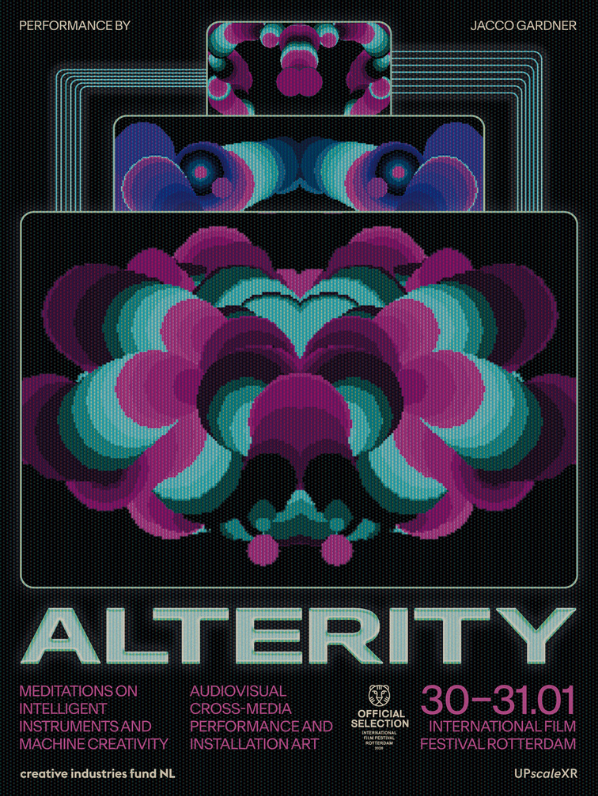
Brutus, Rotterdam, January 2026, as an Art Directions installation.
Premiere at IFFR
The work premiered at Brutus in Rotterdam during the International Film Festival Rotterdam in January 2026, as an Art Directions installation. It was built for that premiere, the occasion the doctorate was funded to produce. What ran there was Max 2.0 on the SE/30, with the artificial intelligence in Max/MSP on that Macintosh. It was not the agent’s work: the agent that now operates the system did not exist until April 2026, and the framework the doctorate later built was not yet part of it. The window, the performances and the talks are on IFFR, Alterity (2026). The design of 2025, made around the Atari ST, the Kurzweil K2000 and the sequencer M, does not include that framework.
Alterity at Brutus during IFFR 2026
Alterity at Brutus during IFFR 2026
Alterity at Brutus during IFFR 2026
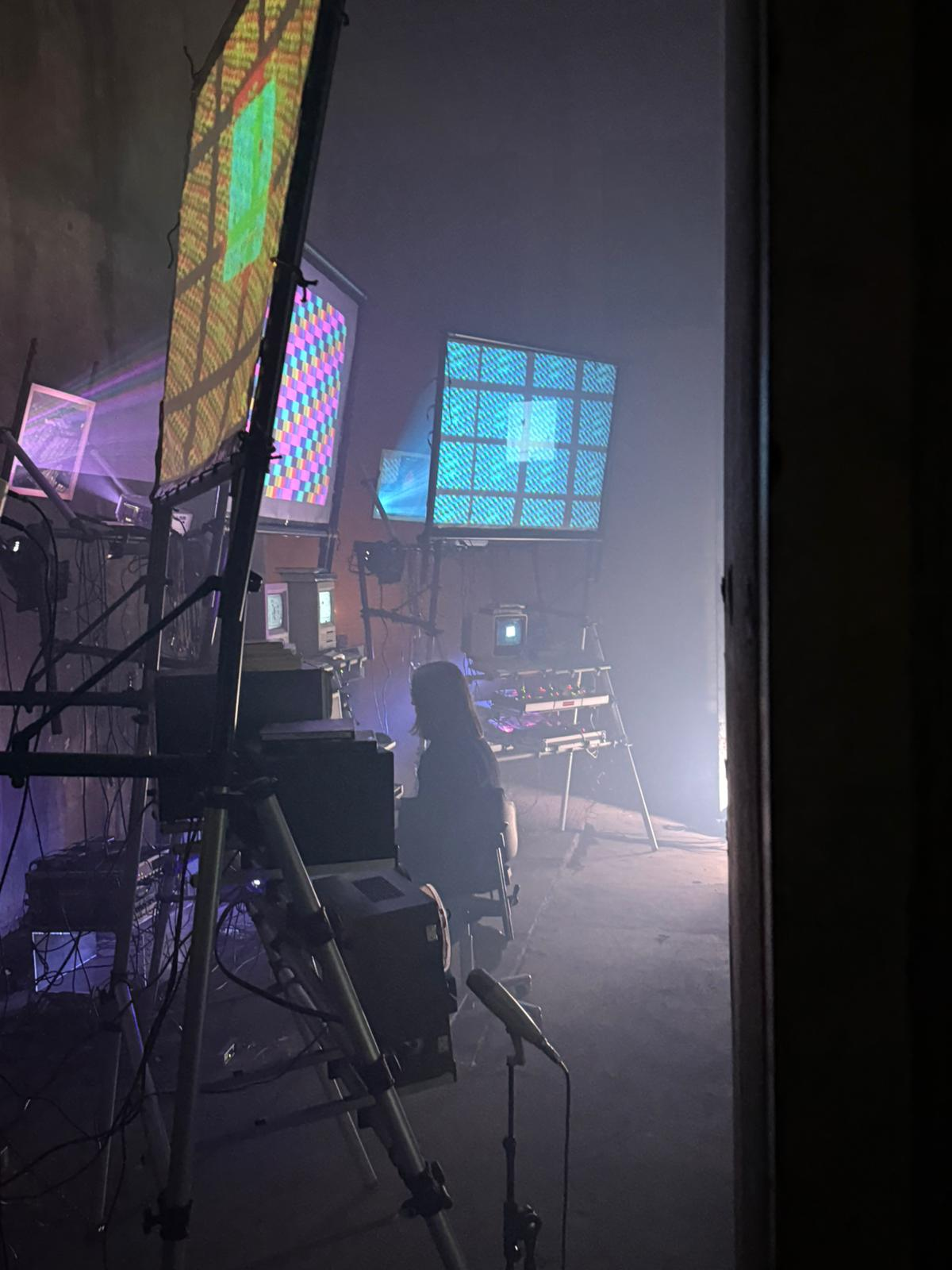
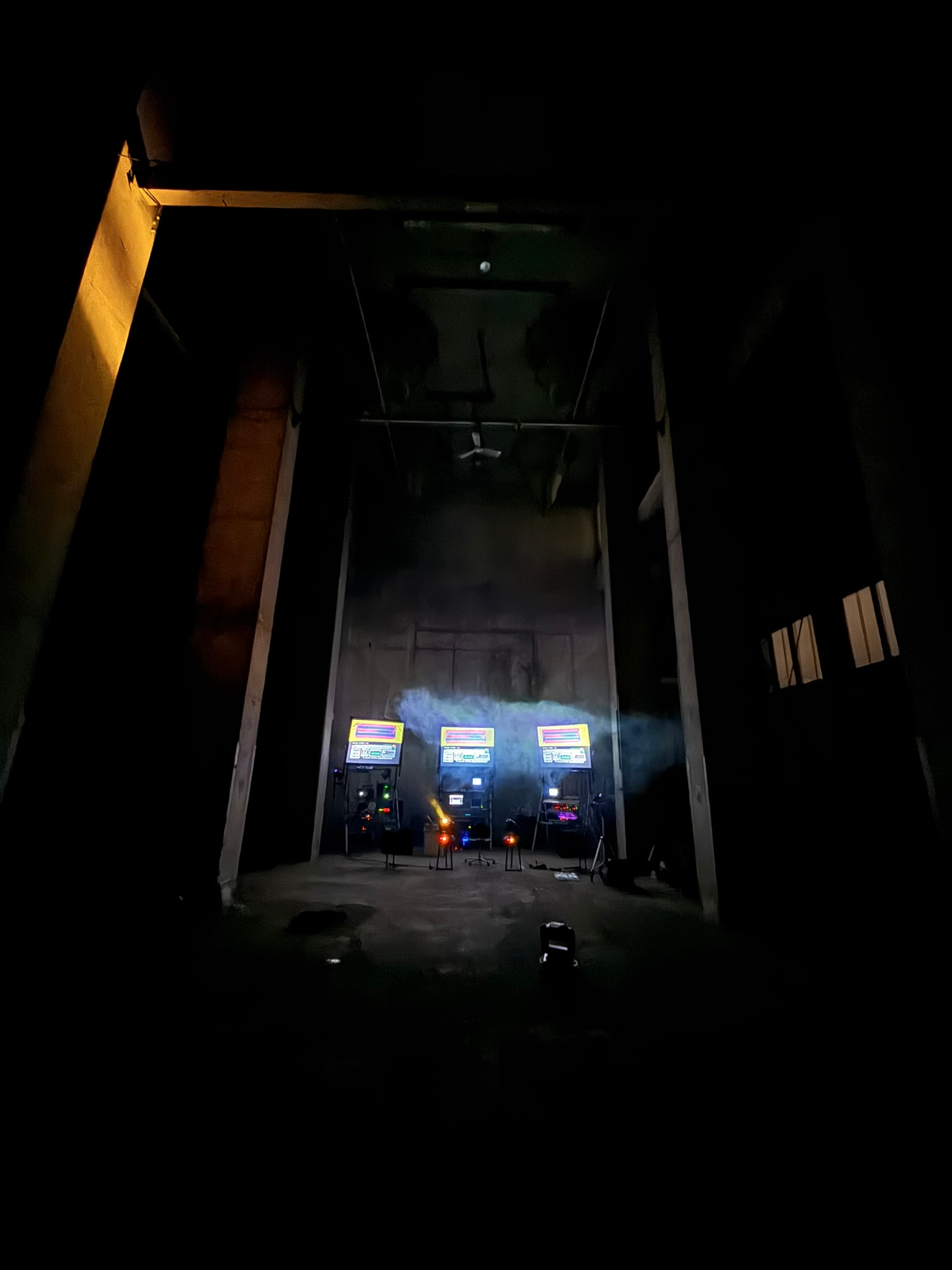
Late August to mid September, the first agent-driven run.
MU, Eindhoven (2026)
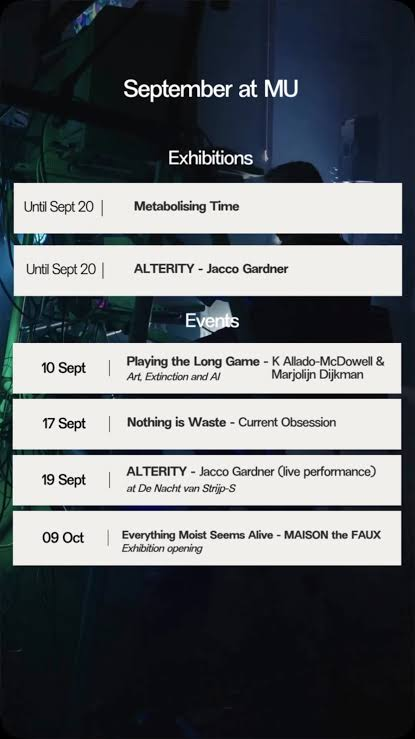
The work then ran at MU Hybrid Art House in Eindhoven from late August into the middle of September 2026, programmed with Hit the City and standing alongside the exhibition Metabolising Time. Dates and performances are on MU and Hit the City, Alterity (2026).
The exhibition gathered fourteen international artists who question the linear model of time, among them:
- Karlos Gil, with Timefall of 2022, in which smoke works on recycled polystyrene for the length of the exhibition.
- Kristina Õllek and Kert Viiart-Õllek, with As the Earliest Carrier Emerges.
- Levi van Gelder, with Ötza, Uninterrupted of 2025.
- K Allado-McDowell, with The Known Lost.
- Max Hooper Schneider, with Twilight at the Earth’s Crust.
- Joey Holder, with Recursion: Model Collapse of 2024.
At MU the system first ran fully agent-driven, and between the performance moments the installation played on unattended, with the agents running through visitor hours on their own. That run is how the practice measures what the system carries alone.
Max/MSP’s role passed in June 2026 to the Raspberry Pi, the framework and Pure Data. The framework was rebuilt in July 2026 into sixteen modules, and the sixteen-module build is the one that ran at MU. The practice’s account of April 2026 describes three.
CONDUCTOR moving through the space on the Martin MAC 250 fixtures. The camera feed was sent back to a multimodal agent to test whether it could work from visual reference of this kind.
Gardner performed the work at MU once more on 19 September 2026, at De Nacht van Strijp-S, the yearly night across the venues of the district. The exhibition closed the following day.
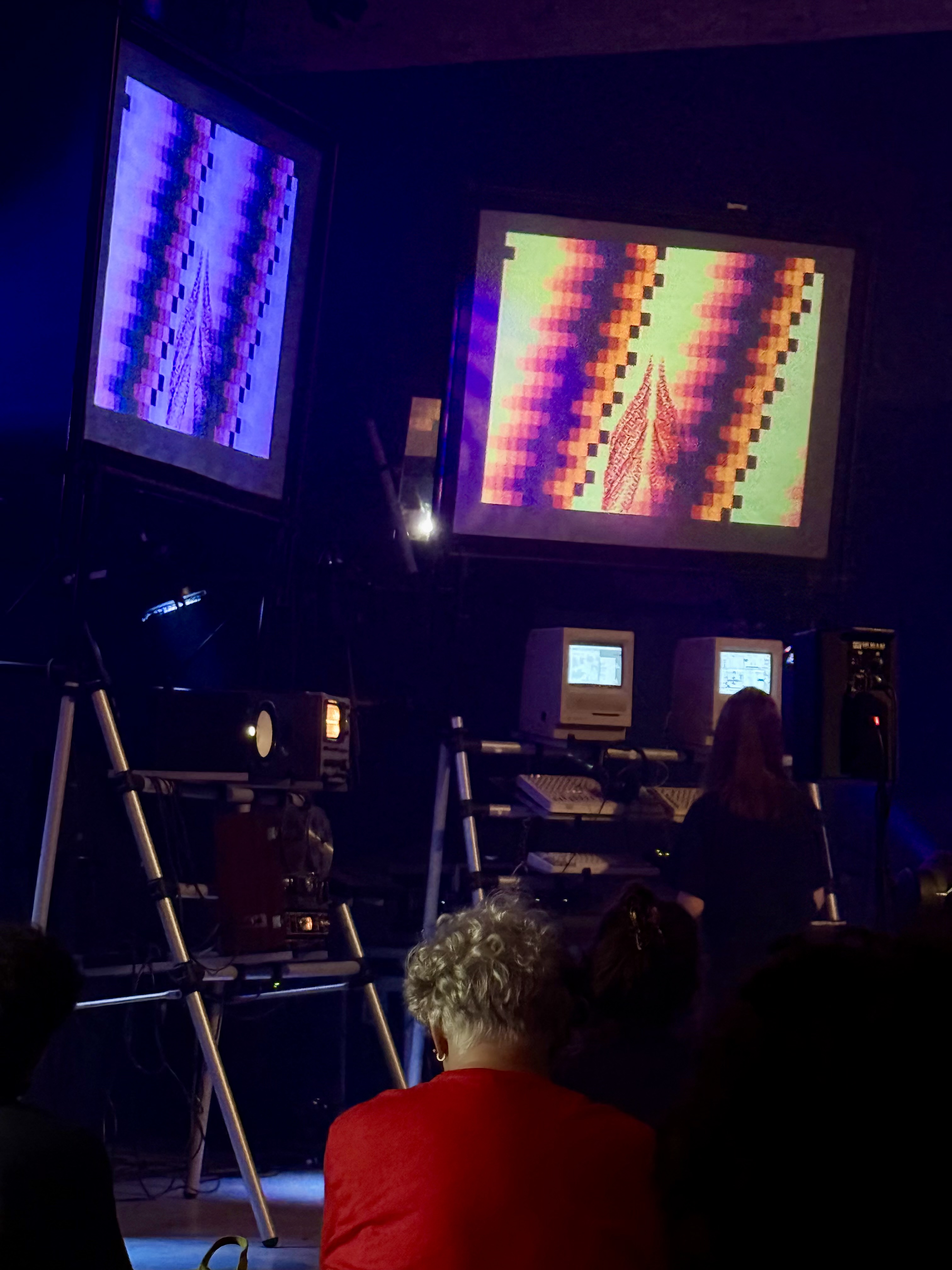
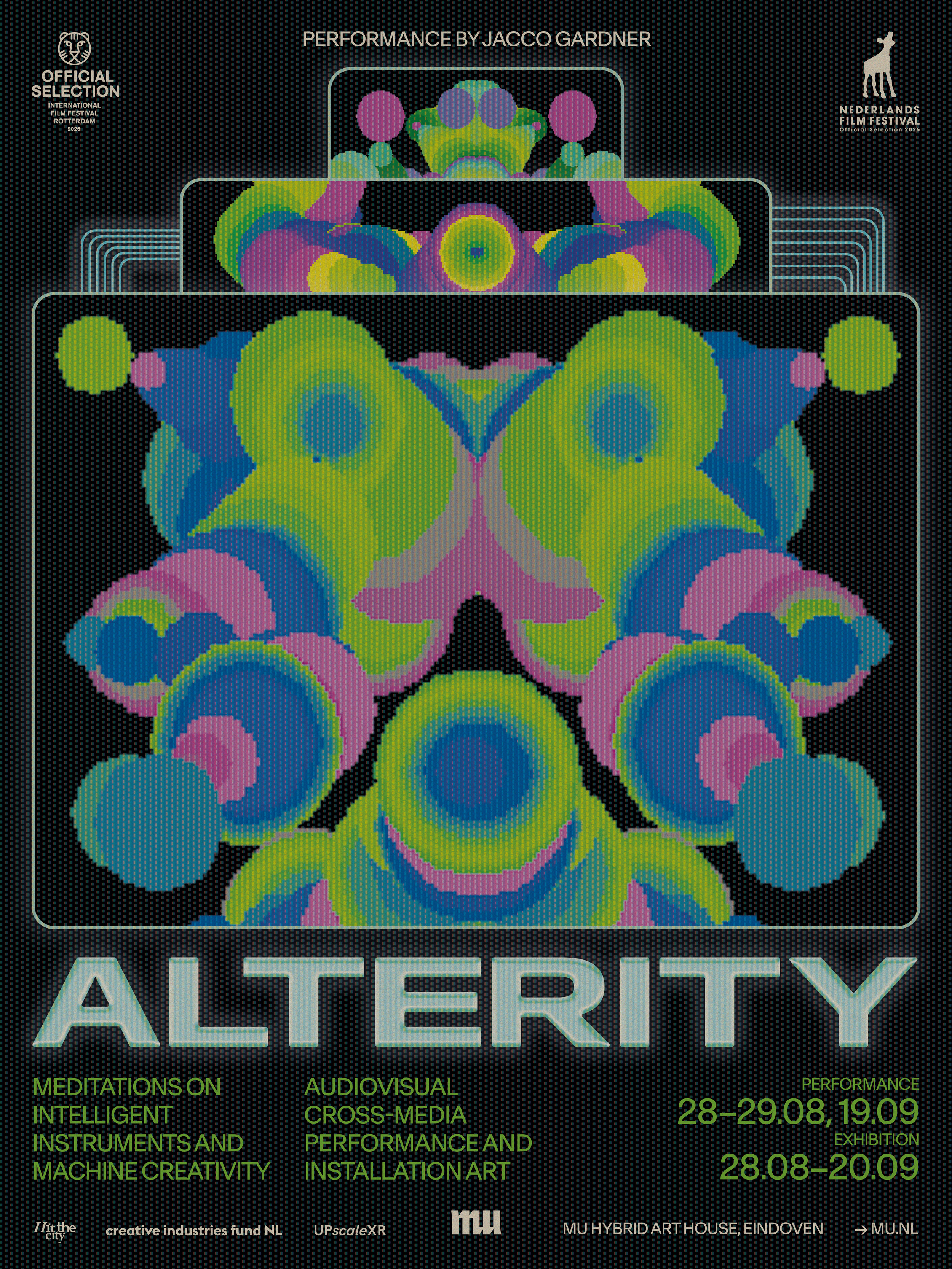
Utrecht, Golden Calf pre-nomination, a 34-page magazine.
Netherlands Film Festival, September 2026
NFF Storyspace 2026
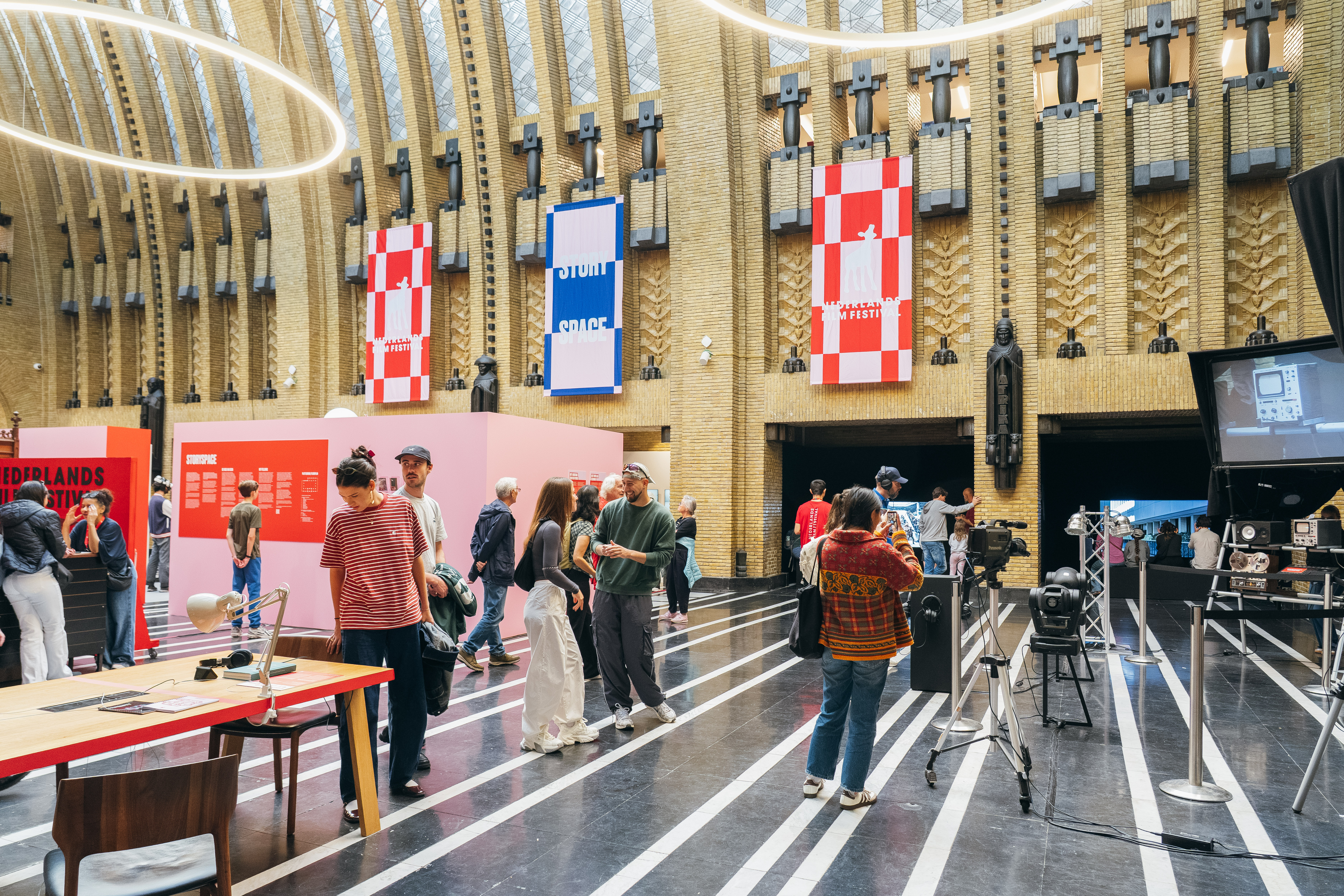
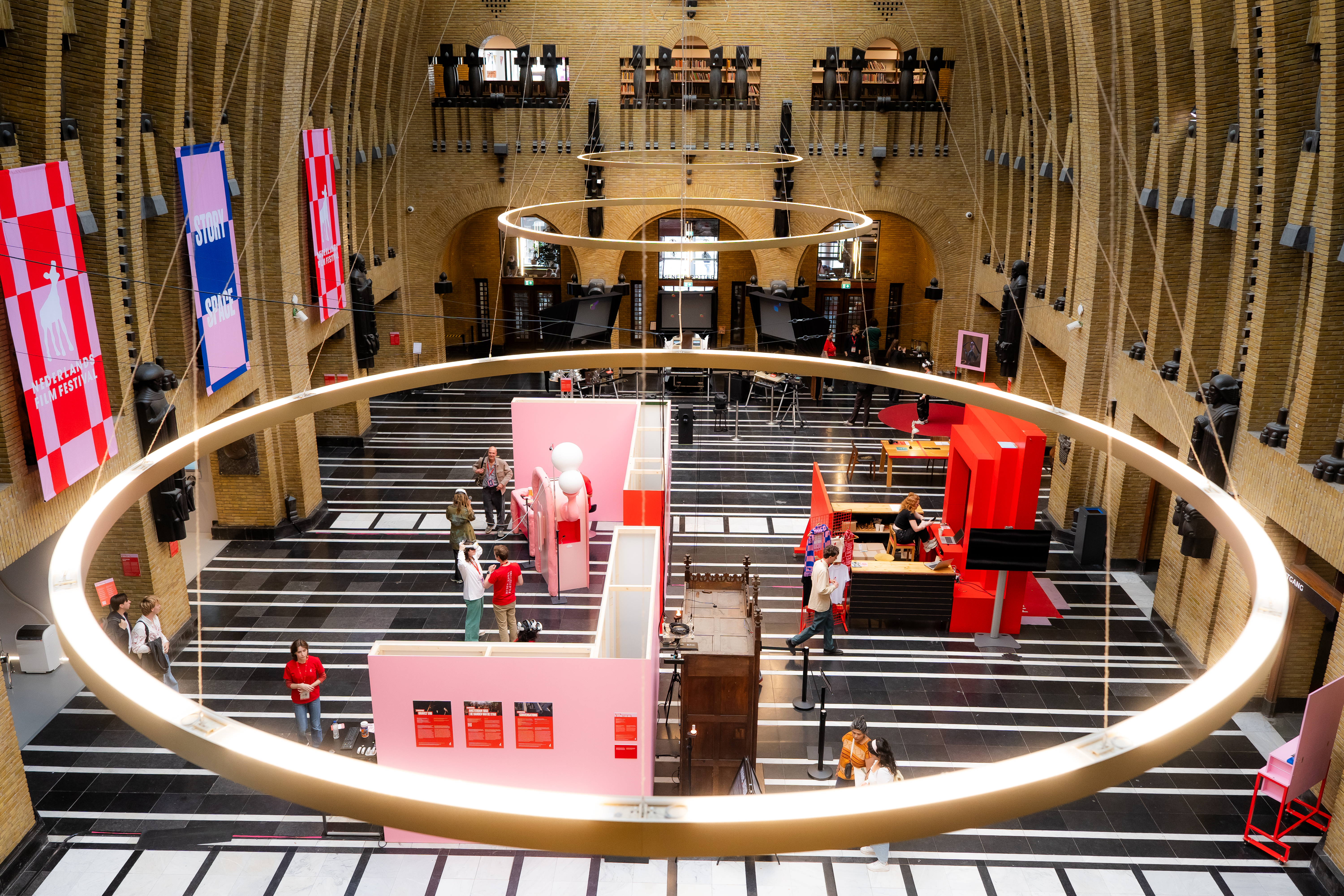
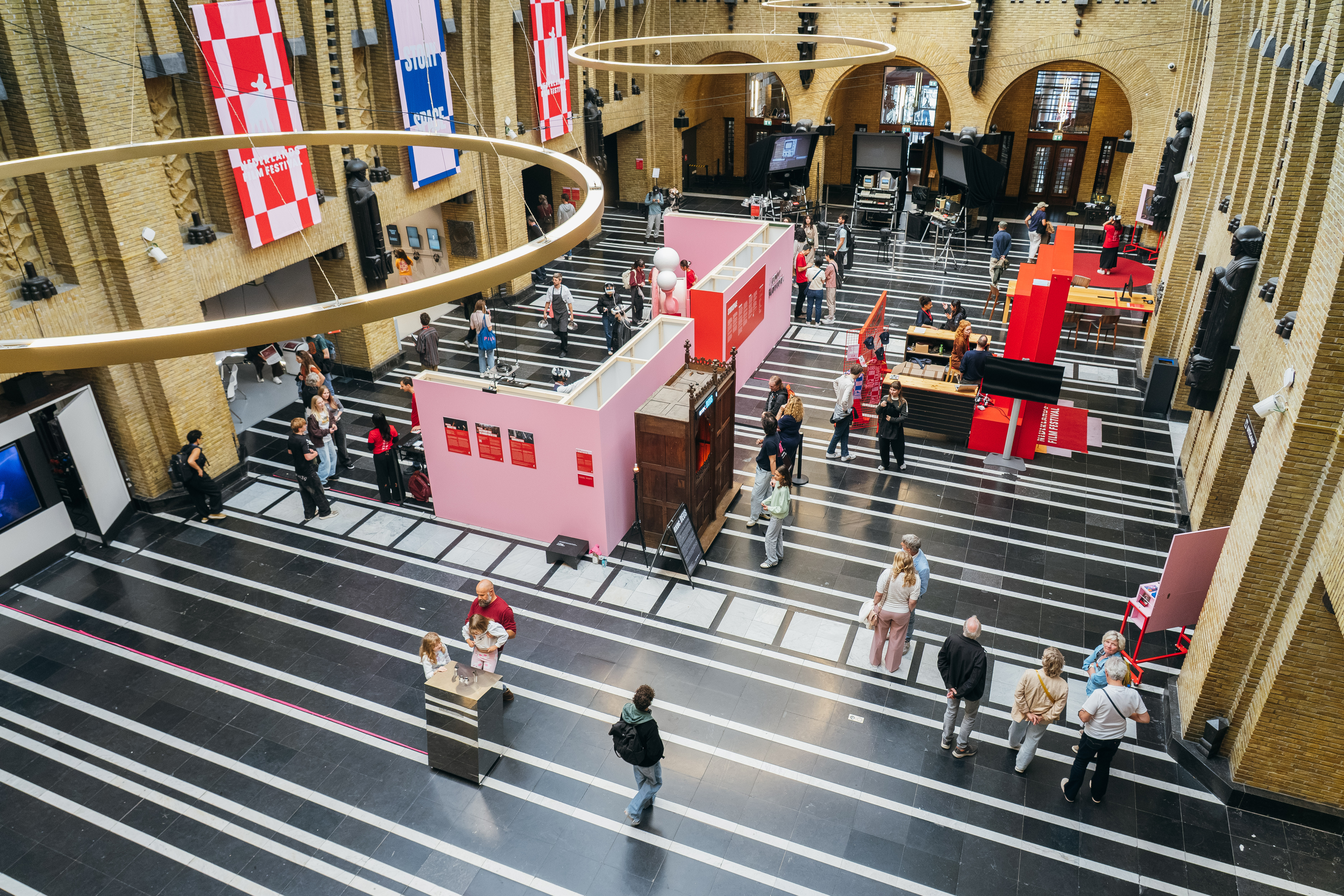
From there the work went to the Netherlands Film Festival in Utrecht, where it was selected for pre-nomination for the Golden Calf for Digital Culture and shown in the Storyspace exhibition at the Neude Library. A reading table was made for the work there, carrying a magazine of 34 pages of which one copy was produced for that table. The material is held on its own page, and the dates, the Artist Talks and the pre-nomination are on NFF, Alterity (2026).
NFF 2026, the reading table at the left of the frameThe reading-table magazine made for NFF 2026
The festival named the exhibition’s common thread when it announced the selection in July 2026, and that thread is conversation: between people, between people and technology, and between people and a larger meaning. The work is part of that thread. Its question is how a person and a model work at one instrument.
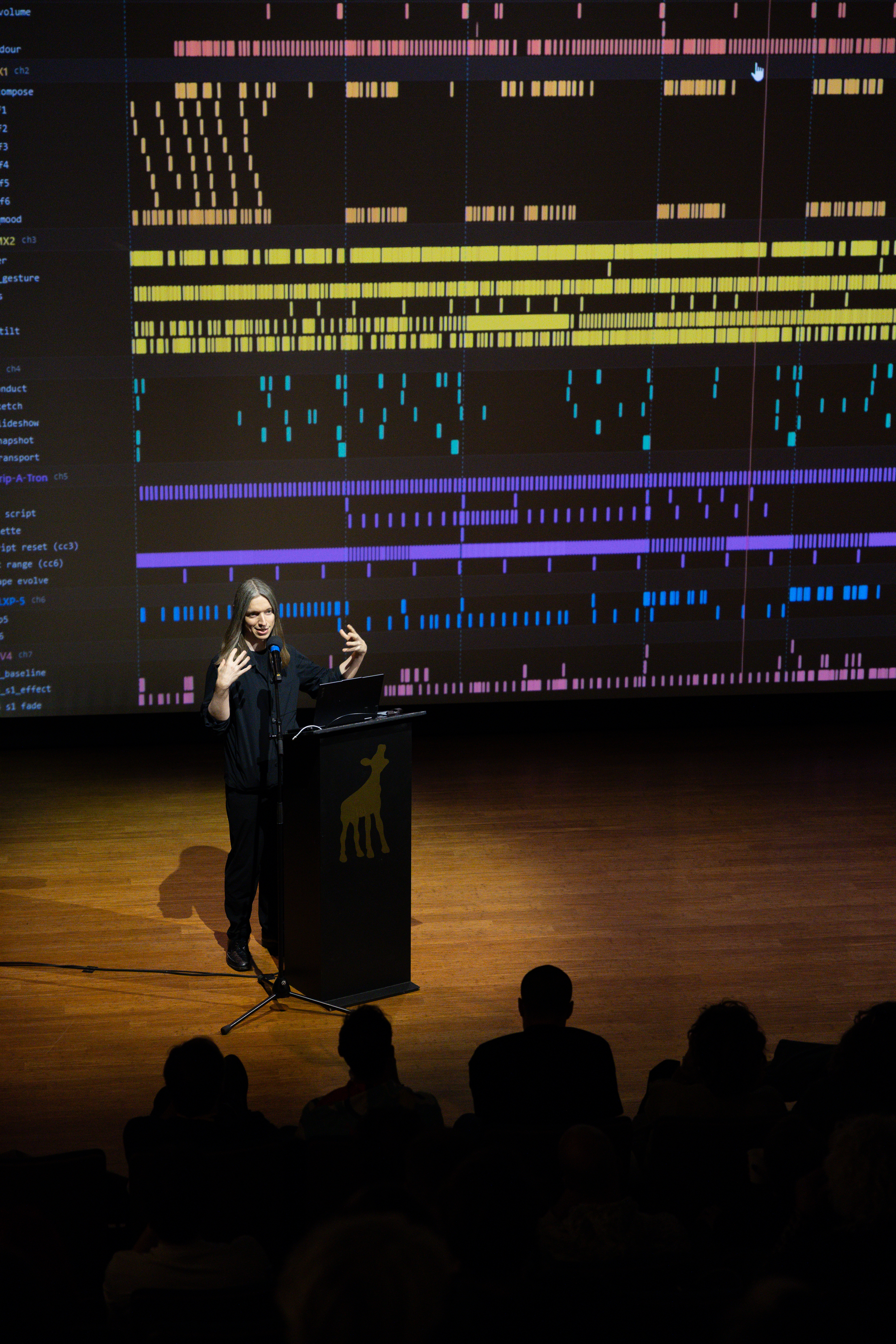
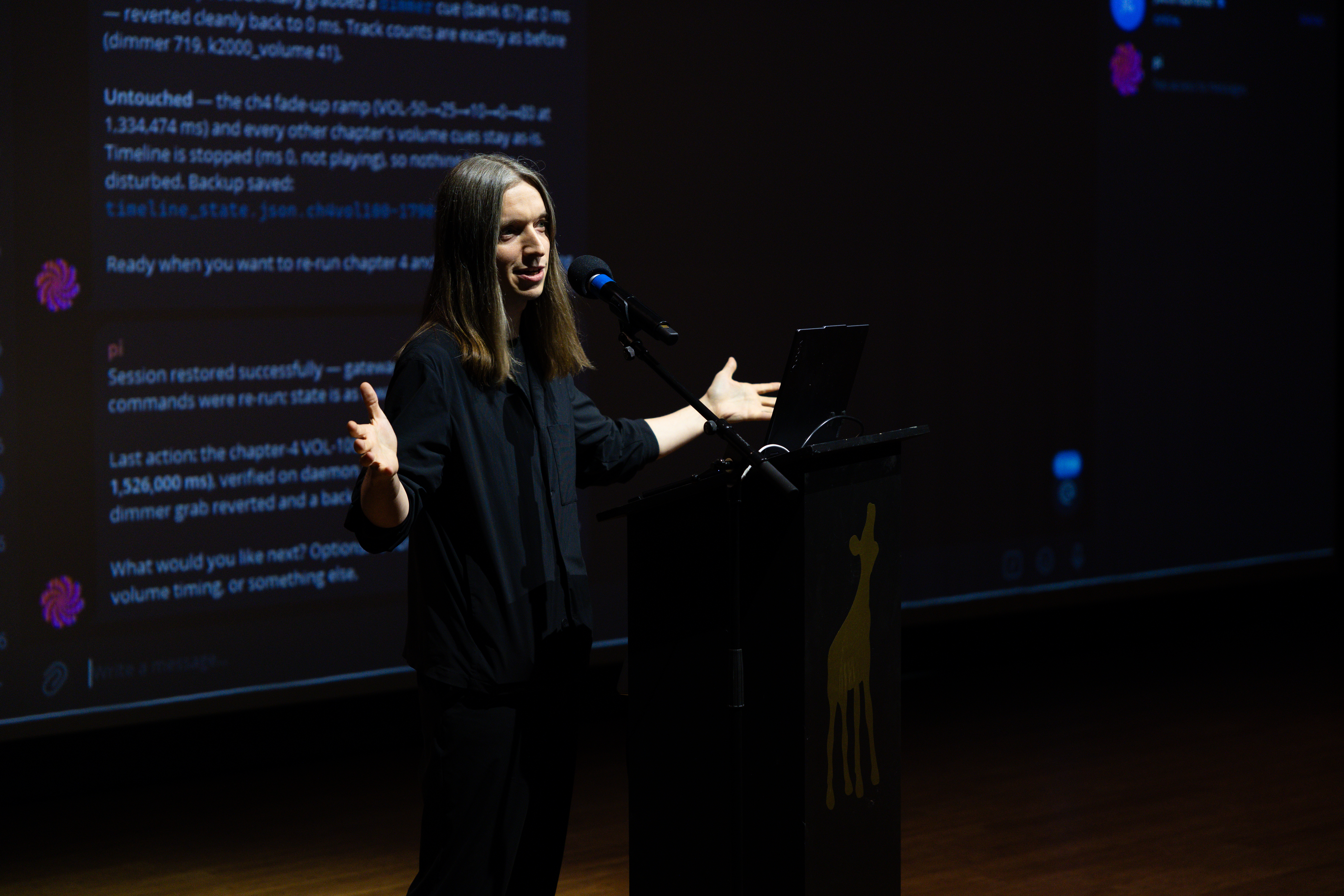
Gardner presented the work at the Storyspace Artist Talks on the opening day, and introduced the practice behind it there.
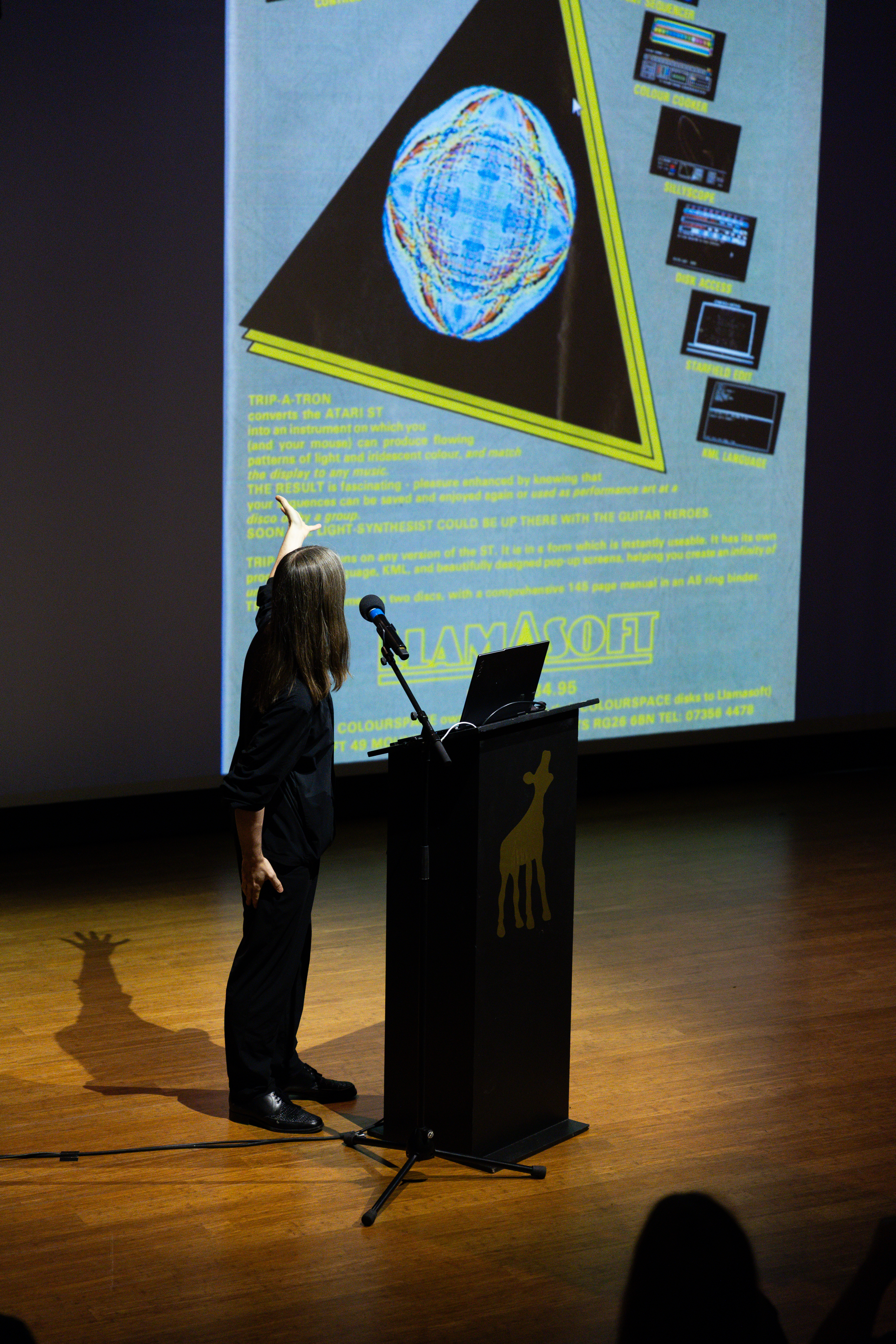
Gardner presenting ALTERITY and the practice behind it at the NFF 2026 Storyspace Artist TalksThe festival placed the work in its digital-culture programme, which is where the research’s public argument reaches an audience outside the music sector. Gardner also represented the festival at Makers Meet & Eat 2026 in Utrecht, taking part as a maker in the programme. The Activity record lists the year in date order.
Gardner, Pandiello, Edwin Gardner, Laujedo, Smit, Rivera.
Production credits
- Concept, composition and CONDUCTOR: Gardner, who also performs the work and speaks the narration.
- Narration text: María Pandiello, written from her own research and from Gardner’s media archaeology, in conversation with him.
- Narrative review, bibliography and conceptual scope: Edwin Gardner, of Studio Monnik.
- Manipulated archival footage, and live camera at the premiere: Lucas Laujedo.
- Production: Floris Smit through UPscaleXR.
- Poster and artwork: Albert S. Rivera.
- Support: the Creative Industries Fund NL.
- The credits name the instruments beside the human collaborators, M, the Kurzweil K2000 and Trip-A-Tron among them, and the video made to document the work closes on the same list.
- Each of those parts decides something about the work, so the authorship question is stated inside the work as well as argued in the research.
An early design proposal from September 2025 for CONDUCTOR before the installation was built.
Merak of 1988, Kraftwerk, and Behrman and Lewis’s Voyager.
Line of descent
A festival account of the work names Merak, the 1988 piece by Adrian Wagner and Minter, as an inspiration, together with Minter’s generative software and the intelligent sequencer M. Merak joins a composer’s music to a machine’s generated imagery, and this work joins a model’s decisions to a machine’s instruments.
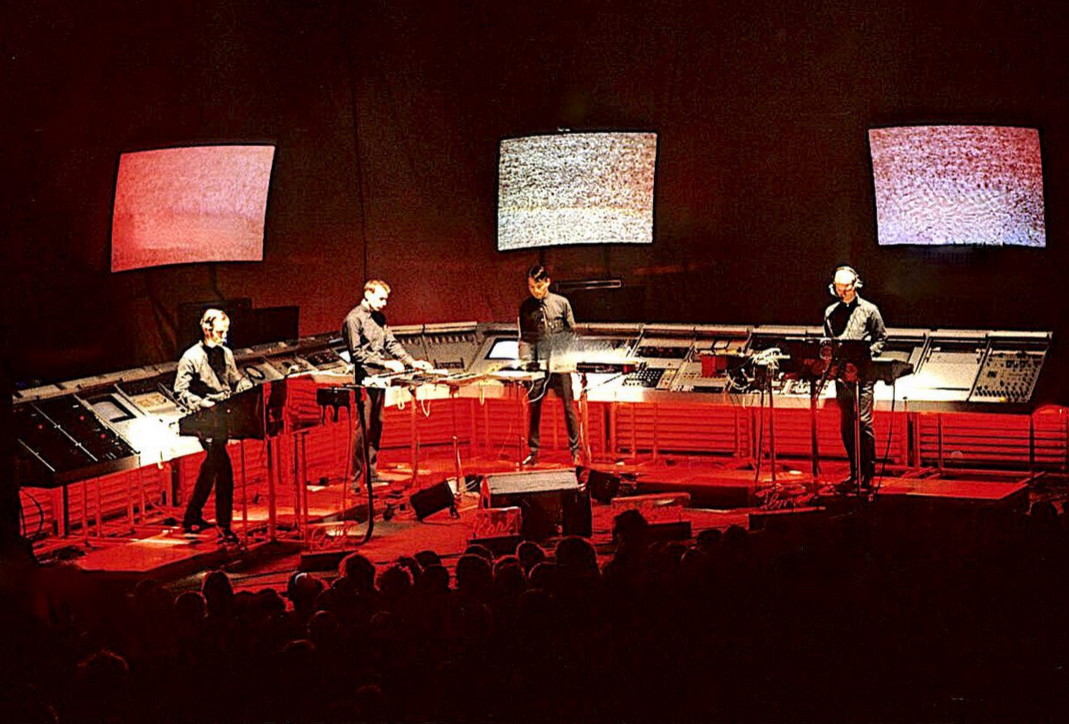
A second descent is Kraftwerk‘s stage, which took a studio on tour and performed with it as the instrument.
The work’s own account names two earlier works that have the arrangement it uses. David Behrman’s On the Other Ocean of 1977 followed two musicians and changed its harmonies in response to them. George Lewis’s Voyager, developed from the 1980s, improvises alongside human musicians while pursuing a behaviour of its own. In both, as here, a person and a machine work in one notation and need overlapping competence in it.
The account of ALTERITY, and Clark and Chalmers.
Work’s own account
The work describes itself in its own words on The account of ALTERITY. That page states the argument the work makes about machines and creativity. It is the work’s own account of its position, set beside the record of the practice in this archive. That account rests on the extended mind theory of Clark and Chalmers, in which thinking is shaped by the tools and media a person works with.
Added as the research runs.
Unforeseen
Here the unforeseen situations, sometimes difficult, sometimes unexpectedly interesting, will be described as the project runs. Many of these unforeseen situations have already occurred and have been recorded. They will be added in the time to come.
One optional page.
Related topics
The following pages are part of this page but are not needed to understand it.